Nestled at the northwestern tip of Oregon, Warrenton stands as a testament to American pioneering spirit and westward expansion. This historic coastal community represents the culmination of one of the most significant migration routes in United States history—the Oregon Trail. Where thousands of determined settlers concluded their arduous 2,000-mile journey, a vibrant town emerged that continues to honor its remarkable heritage while embracing modern coastal living.
The Historical Significance of Warrenton’s Location
Warrenton’s geographical position at the mouth of the Columbia River made it a natural endpoint for Oregon Trail pioneers seeking new opportunities in the Pacific Northwest. After months of traversing prairies, mountains, and rivers, emigrants finally reached the Pacific Ocean at this strategic location. The settlement’s proximity to both the Columbia River and the Pacific Ocean positioned it as a crucial hub for maritime commerce and territorial expansion during the 19th century.
The town was officially incorporated in 1899 and named after D.K. Warren, a prominent merchant who established one of the area’s first general stores. However, the region’s history extends far beyond its formal establishment, with Native American tribes having inhabited these coastal lands for thousands of years before European and American settlers arrived.
The Oregon Trail’s Western Terminus
For the approximately 400,000 people who traveled the Oregon Trail between 1841 and 1869, reaching the Pacific coast represented the fulfillment of extraordinary hardship and unwavering determination. Warrenton and its surrounding areas became symbols of hope and new beginnings for these intrepid travelers. Many pioneers who survived the six-month journey established homesteads in the region, drawn by the promise of fertile land, abundant natural resources, and economic opportunity.
The convergence of the Oregon Trail with the Pacific Ocean at this location created a unique cultural melting pot. Settlers from diverse backgrounds—farmers from the Midwest, entrepreneurs from Eastern cities, and adventurers from across the nation—came together to build communities that would shape Oregon’s future.
Maritime Heritage and Economic Development
Warrenton’s development was intrinsically linked to its maritime advantages. The town’s location along the Columbia River shipping channel facilitated the growth of fishing, shipping, and trade industries that became economic cornerstones of the community. Throughout the late 19th and early 20th centuries, Warrenton evolved into a significant fishing port, with canneries processing the abundant salmon and other seafood harvested from the Pacific waters.
The establishment of Fort Stevens in 1863 further enhanced Warrenton’s strategic importance. This military installation, constructed to protect the Columbia River entrance during the Civil War era, remained active through World War II and contributed substantially to the region’s economic and social development.
Cultural Attractions and Historical Preservation
Today’s Warrenton maintains strong connections to its pioneering past through various cultural institutions and preservation efforts. Visitors and residents can explore numerous sites that commemorate the Oregon Trail legacy and the region’s maritime history:
- Fort Stevens State Park: This expansive park preserves military fortifications and offers insights into coastal defense history spanning nearly a century
- Columbia River Maritime Museum: Located in nearby Astoria, this institution documents the rich nautical heritage of the region
- Historic Warrenton Waterfront: The preserved waterfront district showcases early 20th-century architecture and maritime infrastructure
- Local Museums and Interpretive Centers: These facilities provide educational resources about pioneer life and the conclusion of the Oregon Trail
Natural Beauty and Recreational Opportunities
The same natural attributes that attracted Oregon Trail pioneers continue to draw visitors to Warrenton today. The town’s coastal location provides access to pristine beaches, wildlife viewing opportunities, and spectacular ocean vistas. The surrounding wetlands and estuaries support diverse ecosystems that serve as habitats for numerous bird species, making the area a premier destination for ornithologists and nature enthusiasts.
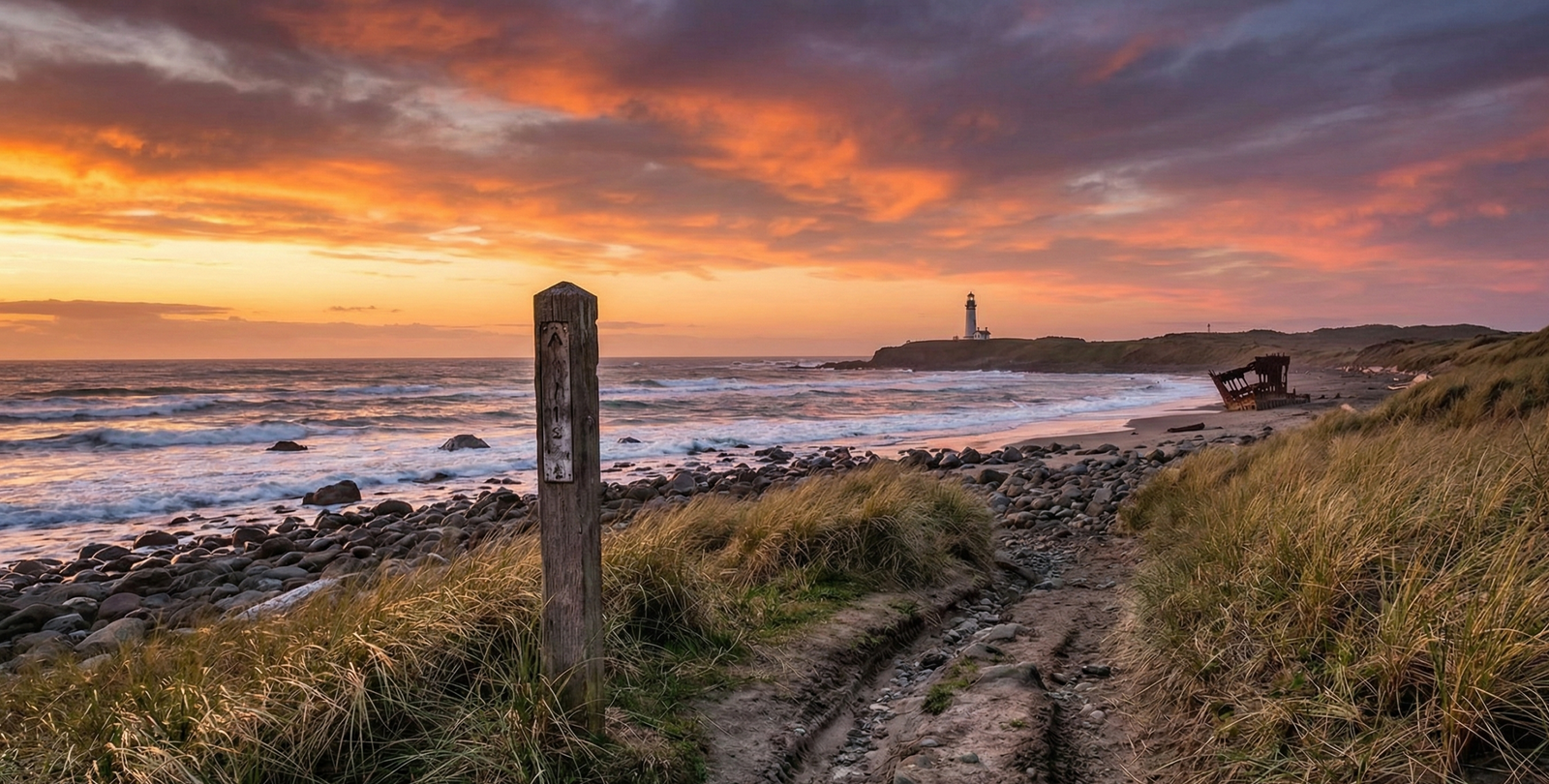
Fort Stevens State Park alone encompasses over 4,000 acres of diverse landscapes, including beaches, forests, and freshwater lakes. The park’s historical significance is complemented by exceptional recreational facilities, from camping and hiking to wildlife observation and beachcombing. The wreck of the Peter Iredale, a four-masted steel barque that ran aground in 1906, remains visible on the beach and stands as one of Oregon’s most photographed landmarks.
Modern Warrenton: Bridging Past and Present
Contemporary Warrenton successfully balances historical preservation with progressive development. The community of approximately 5,700 residents maintains its small-town character while providing modern amenities and services. The local economy has diversified beyond its traditional maritime foundations to include tourism, retail, and service industries, though fishing and port activities remain significant contributors.
The town’s commitment to education is evident through partnerships with regional institutions that promote understanding of Oregon Trail history and coastal ecology. Educational programs, living history demonstrations, and community events regularly engage residents and visitors in exploring the area’s rich heritage.
The Enduring Legacy of Pioneer Spirit
Warrenton represents more than just the geographical conclusion of the Oregon Trail; it embodies the enduring American values of perseverance, courage, and the pursuit of opportunity. The town’s history reflects the broader narrative of westward expansion and the transformation of the American continent during the 19th century.
For contemporary visitors, Warrenton offers a tangible connection to this pivotal period in American history. Walking the same coastal landscapes that greeted exhausted pioneers, viewing the Pacific Ocean from shores they finally reached after months of travel, and exploring preserved historical sites creates powerful links across generations.
Planning Your Visit to Historic Warrenton
Warrenton’s accessibility and abundance of attractions make it an ideal destination for history enthusiasts, outdoor adventurers, and anyone seeking to understand the Oregon Trail’s profound impact on American development. The town’s proximity to Astoria, another historically significant community, allows visitors to experience multiple dimensions of Pacific Northwest heritage within a compact geographical area.
The temperate coastal climate makes Warrenton welcoming throughout the year, though summer months offer the most favorable weather conditions for outdoor exploration.