
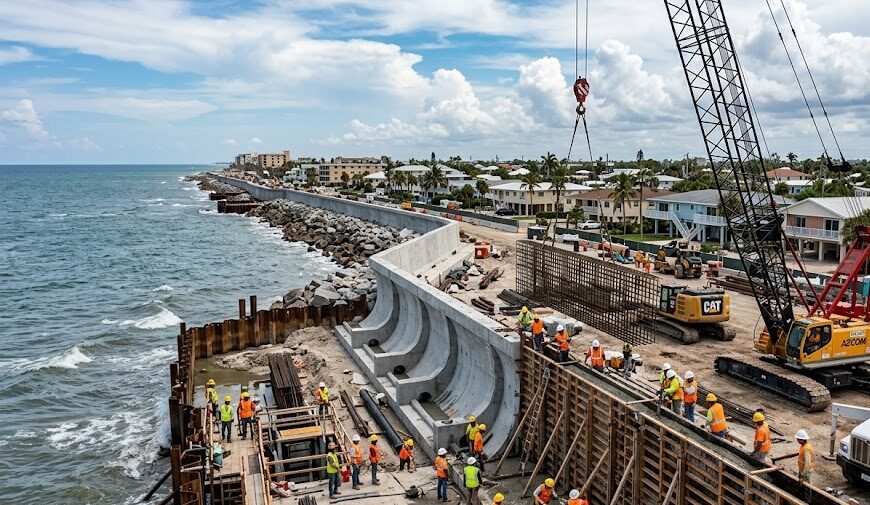
America’s coastal regions face unprecedented challenges as climate change intensifies the frequency and severity of extreme weather events. With approximately 40% of the U.S. population residing in coastal counties, the imperative to develop resilient infrastructure has never been more critical. Building climate-ready coastal infrastructure represents not merely an engineering challenge but a comprehensive strategy to safeguard communities, economies, and ecosystems for generations to come.
Understanding the Coastal Infrastructure Challenge
The convergence of rising sea levels, intensifying storms, and coastal erosion presents a multifaceted threat to existing infrastructure systems. Transportation networks, water treatment facilities, energy installations, and residential developments all face increased vulnerability. Current projections indicate that sea levels could rise between one to four feet by 2100, fundamentally altering the risk profile of coastal areas across the nation.
Traditional infrastructure design approaches, based on historical climate data, no longer provide adequate protection. The paradigm shift toward forward-looking, adaptive infrastructure planning acknowledges that past performance cannot predict future conditions in an era of accelerating climate change.
Key Components of Climate-Resilient Coastal Infrastructure
Natural and Nature-Based Solutions
Integrating natural systems into infrastructure planning offers multiple benefits beyond traditional engineered approaches. These solutions work in harmony with coastal processes while providing enhanced ecosystem services:
- Restored wetlands and marshes that absorb storm surge energy and filter pollutants
- Living shorelines incorporating native vegetation to stabilize coastlines naturally
- Oyster reef restoration to reduce wave action and improve water quality
- Beach and dune nourishment programs to create natural barriers against flooding
- Strategic mangrove and seagrass preservation to protect against erosion
Advanced Engineering Solutions
Modern engineering techniques provide critical protection for high-density urban coastal areas where natural solutions alone may prove insufficient. These approaches include:
- Elevated roadways and critical infrastructure above projected flood levels
- Storm surge barriers and flood gates designed for extreme weather scenarios
- Improved drainage systems with enhanced capacity for intense precipitation events
- Resilient building codes requiring climate-adaptive construction standards
- Underground utility placement to minimize exposure to flooding and wind damage
Investment and Economic Considerations
The financial implications of climate-ready infrastructure development demand substantial upfront investment. However, economic analyses consistently demonstrate that proactive resilience measures cost significantly less than reactive disaster recovery. The National Institute of Building Sciences estimates that every dollar invested in disaster mitigation saves society six dollars in future costs.
Federal funding mechanisms, including the Infrastructure Investment and Jobs Act and various FEMA grant programs, provide critical resources for coastal communities. State and local governments must leverage these opportunities while developing innovative financing mechanisms, including green bonds, public-private partnerships, and resilience bonds specifically designed to fund climate adaptation projects.
Community Engagement and Equity
Effective climate-ready infrastructure development requires meaningful engagement with affected communities. Low-income neighborhoods and communities of color often face disproportionate climate risks due to historical development patterns and underinvestment in protective infrastructure. Equitable planning processes must prioritize:
- Inclusive stakeholder consultation throughout project development
- Environmental justice considerations in infrastructure siting decisions
- Accessible communication about climate risks and adaptation strategies
- Workforce development programs creating local employment opportunities
- Affordable housing protection as communities implement resilience measures
Technological Innovation and Data Integration
Advanced technologies enable more sophisticated approaches to coastal infrastructure resilience. Real-time monitoring systems, predictive modeling, and artificial intelligence applications enhance decision-making capabilities. Geographic Information Systems (GIS) allow planners to visualize vulnerability patterns and optimize intervention strategies across complex coastal landscapes.
Digital twins—virtual replicas of physical infrastructure systems—enable scenario testing and performance optimization before implementing costly physical modifications. These technological tools, combined with improved climate modeling, support evidence-based infrastructure investments that maximize resilience returns.
Regulatory Frameworks and Policy Development
Comprehensive policy frameworks establish the foundation for systematic infrastructure resilience. Effective regulatory approaches include:
- Updated building codes incorporating future climate projections
- Setback requirements preventing development in high-risk coastal zones
- Mandatory climate risk assessments for major infrastructure projects
- Coordinated regional planning across jurisdictional boundaries
- Performance standards ensuring infrastructure longevity under changing conditions
Federal agencies, including NOAA and the Army Corps of Engineers, continue refining technical guidance documents that inform local implementation. States increasingly adopt comprehensive coastal management plans that integrate climate adaptation across multiple infrastructure sectors.
Case Studies in Successful Implementation
Several American coastal communities demonstrate effective climate-ready infrastructure strategies. Miami Beach’s extensive stormwater system upgrades, including raised roadways and enhanced pump capacity, address chronic flooding while maintaining urban functionality. Norfolk, Virginia’s integrated approach combines green infrastructure with traditional engineering to manage subsidence and sea level rise impacts.
The San Francisco Bay Area’s coordinated regional approach to sea level rise planning exemplifies multi-jurisdictional collaboration. These examples provide valuable insights for communities beginning their resilience journeys, demonstrating that tailored, locally appropriate solutions yield the most sustainable outcomes.
Looking Forward: A Resilient Coastal Future
Building climate-ready coastal infrastructure represents a generational commitment requiring sustained political will, adequate funding, and ongoing technical innovation. Success demands integration across traditional sectoral boundaries, bringing together transportation planners, environmental scientists, community advocates, and economic development specialists.
The challenge extends beyond preventing damage to creating vibrant, sustainable coastal communities that thrive despite climate uncertainties. As extreme weather events increase in frequency and intensity, the communities that invest wisely in resilient infrastructure today will maintain economic vitality and quality of life tomorrow. The time for action is now—delay only increases costs and risks for America’s coastal regions.