
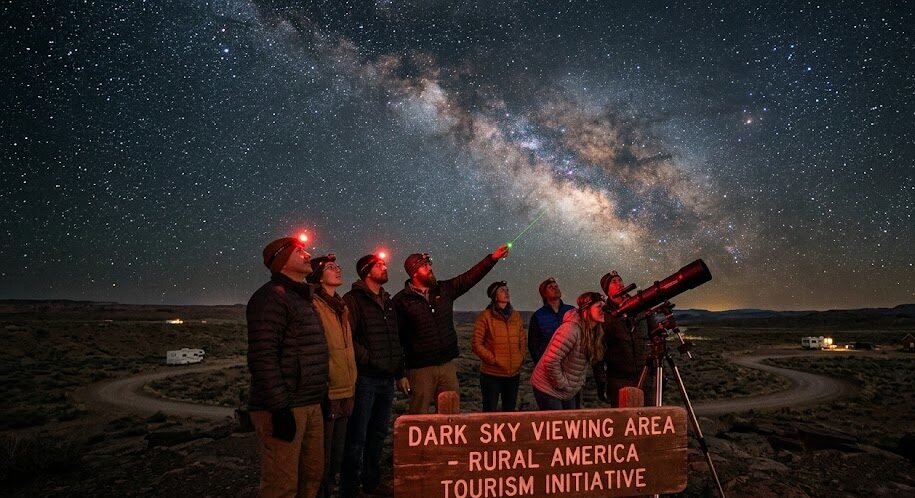
As light pollution continues to obscure the night sky in urban centers across America, a growing number of travelers are venturing into rural landscapes in search of pristine celestial views. This phenomenon, known as dark sky tourism, has emerged as a significant economic and cultural opportunity for communities far removed from metropolitan areas, transforming the simple act of stargazing into a sophisticated travel experience.
The Rising Phenomenon of Dark Sky Tourism
Dark sky tourism represents a specialized form of travel centered on experiencing unpolluted night skies where stars, planets, and celestial phenomena can be observed with exceptional clarity. According to the International Dark-Sky Association, approximately 80% of Americans now live under light-polluted skies, creating unprecedented demand for destinations where the Milky Way remains visible to the naked eye.
This burgeoning interest has catalyzed significant developments across rural America, where remote locations once considered economically disadvantaged now possess a valuable natural resource: darkness. Communities have recognized that their geographic isolation, previously viewed as a limitation, has become a distinctive competitive advantage in the tourism marketplace.
Economic Impact on Rural Communities
The financial implications of dark sky tourism extend well beyond simple stargazing experiences. Rural communities that have invested in dark sky preservation and tourism infrastructure are witnessing measurable economic benefits:
- Increased hotel and lodging occupancy rates during astronomical events
- Growth in restaurant and retail revenues from visiting astronomers and tourists
- Creation of specialized employment opportunities in guiding, education, and hospitality
- Enhanced property values in designated dark sky areas
- Extended tourism seasons beyond traditional peak periods
Small towns that have received International Dark Sky designations report significant increases in visitor numbers, with some communities experiencing double-digit percentage growth in tourism-related revenue within the first years of certification.
Infrastructure and Development Requirements
Successfully capitalizing on dark sky tourism necessitates thoughtful infrastructure development that balances visitor accessibility with sky quality preservation. Communities pursuing this opportunity must address several critical components:
Lighting Ordinances and Regulations
Municipalities must implement comprehensive lighting policies that minimize upward light spillage while maintaining public safety. These regulations typically require shielded fixtures, warmer color temperatures, and reduced illumination during late-night hours. Such measures ensure that the quality of darkness remains protected even as visitor numbers increase.
Observation Facilities and Amenities
Purpose-built observation platforms, astronomy parks, and visitor centers have become essential components of successful dark sky destinations. These facilities provide tourists with optimal viewing conditions while offering educational programming that enhances the experience and promotes conservation awareness.
Accommodation and Services
The hospitality sector in dark sky regions has evolved to meet the specific needs of astronomy tourists, with establishments offering amenities such as red-light flashlights, blackout curtains for daytime sleeping, and telescope-friendly patios or observation decks.
Educational and Scientific Opportunities
Dark sky tourism transcends mere recreational stargazing, offering substantial educational value that attracts families, students, and amateur astronomers. Many destinations have partnered with universities, research institutions, and astronomy organizations to develop programming that includes:
- Guided constellation tours and mythology presentations
- Astrophotography workshops and technical instruction
- Telescope operation and celestial navigation courses
- Lectures on cosmology, planetary science, and space exploration
- Citizen science initiatives that engage visitors in meaningful research
These educational components add depth to the tourism experience while fostering greater appreciation for astronomical science and environmental conservation.
Preservation and Sustainability Challenges
As dark sky tourism gains popularity, communities face the paradoxical challenge of promoting visitation while protecting the very resource that attracts tourists. Sustainable management strategies must address potential negative impacts including:
Increased traffic and associated light pollution from vehicle headlights can compromise sky quality during peak visitation periods. Communities have responded by implementing designated parking areas, shuttle services, and timed-entry systems that distribute visitor impact across manageable intervals.
The pressure to expand tourism infrastructure—including additional lodging, restaurants, and commercial facilities—must be carefully managed to prevent the introduction of light sources that would degrade astronomical viewing conditions. Zoning regulations and design standards play crucial roles in maintaining the delicate balance between economic development and resource preservation.
Marketing and Visitor Engagement Strategies
Successful dark sky destinations employ sophisticated marketing approaches that highlight their unique celestial assets while educating potential visitors about the rarity and value of pristine night skies. Digital platforms, social media campaigns featuring astrophotography, and partnerships with astronomy influencers have proven particularly effective in reaching target demographics.
Many communities coordinate their promotional efforts around predictable astronomical events such as meteor showers, lunar eclipses, and planetary alignments, creating special programming that attracts both novice observers and experienced astronomers. These events generate concentrated economic activity while building destination recognition and repeat visitation.
The Future Trajectory of Dark Sky Tourism
As awareness of light pollution grows and urban populations continue to expand, the appeal of dark sky destinations appears positioned for sustained growth. Rural communities that invest strategically in this sector may secure long-term economic advantages while simultaneously contributing to important conservation objectives.
Emerging technologies, including virtual reality experiences, advanced telescope systems accessible to public users, and increasingly sophisticated astrophotography equipment, promise to enhance visitor experiences and broaden the appeal of dark sky tourism to diverse audience segments.
The convergence of environmental consciousness, experiential travel preferences, and scientific curiosity suggests that dark sky tourism will continue evolving as a significant component of rural America’s economic landscape. Communities that recognize and cultivate this opportunity may find that their greatest natural resource has been overhead all along, waiting to be appreciated and shared with those seeking connection to the cosmos.