
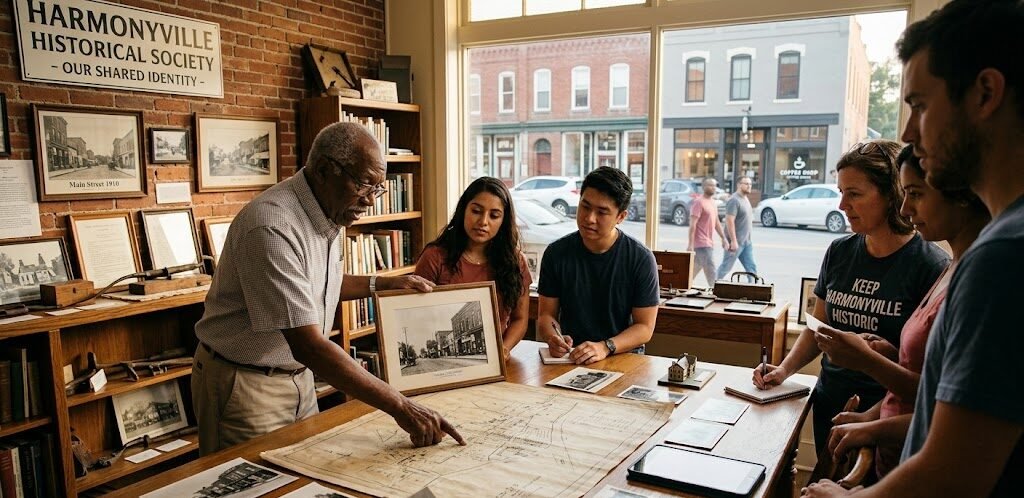
In an era dominated by globalization and rapid technological advancement, the significance of local history often becomes overshadowed by broader national and international narratives. However, understanding the historical context of our immediate communities remains fundamentally important to shaping our collective identity and informing contemporary decision-making in the United States.
The Foundation of Community Identity
Local history serves as the bedrock upon which community identity is built. Every town, city, and region possesses a unique narrative that distinguishes it from others and provides residents with a sense of belonging and continuity. These stories—of founding families, economic transformations, cultural developments, and local heroes—create a shared understanding that binds communities together across generations.
When citizens comprehend the historical trajectory of their localities, they develop a deeper appreciation for the institutions, architecture, and traditions that define their daily environment. This awareness fosters civic pride and encourages active participation in community affairs, as residents recognize themselves as part of an ongoing historical narrative rather than mere transient occupants.
Preserving Cultural Heritage and Diversity
America’s strength lies in its diversity, and local history provides the most authentic lens through which to examine this multifaceted heritage. National histories often homogenize experiences, potentially overlooking the nuanced stories of immigrant communities, indigenous populations, and marginalized groups whose contributions shaped specific regions.
Local historical preservation efforts ensure that these diverse narratives are not lost to time. Through community archives, oral history projects, and historical societies, the experiences of all residents—regardless of their social, economic, or ethnic background—can be documented and celebrated. This inclusive approach to historical record-keeping enriches our understanding of American society and promotes social cohesion.
Informing Contemporary Urban Planning and Development
Understanding local history proves invaluable when addressing modern urban development challenges. Historical knowledge reveals patterns of growth, land use evolution, and the consequences of past planning decisions. This information enables contemporary planners, policymakers, and community leaders to make more informed decisions that respect historical contexts while meeting current needs.
Key benefits of incorporating historical perspectives into urban planning include:
- Identification of historically significant structures and districts worthy of preservation
- Understanding of environmental changes and their impact on local ecosystems
- Recognition of historical infrastructure patterns that inform contemporary development
- Insight into past economic cycles and their effects on community resilience
- Documentation of neighborhood evolution and demographic shifts
Educational Value and Critical Thinking Skills
Local history provides an accessible entry point for developing historical literacy and critical thinking skills, particularly among younger generations. When students examine events and personalities from their own communities, history becomes tangible and personally relevant rather than abstract and distant.
This proximity to historical subjects enables learners to engage directly with primary sources, conduct interviews with community elders, and visit historical sites firsthand. Such experiential learning opportunities foster research skills, analytical thinking, and a more nuanced understanding of historical causation and interpretation.
Economic Benefits Through Heritage Tourism
The economic dimension of local history cannot be overlooked. Heritage tourism represents a significant and growing sector of the American economy, with millions of visitors annually seeking authentic historical experiences in communities across the nation. Well-preserved historical sites, museums, and cultural festivals generate substantial revenue while creating employment opportunities.
Communities that invest in historical preservation and interpretation often experience revitalized downtown areas, increased property values, and enhanced quality of life. These economic benefits demonstrate that honoring local history represents not merely a sentimental exercise but a pragmatic investment in community prosperity.
Connecting Past, Present, and Future
Local history serves as a bridge connecting past achievements and challenges with contemporary circumstances and future possibilities. By examining how previous generations confronted difficulties—whether economic depressions, natural disasters, social conflicts, or technological disruptions—modern communities gain perspective on current challenges and inspiration for innovative solutions.
This historical consciousness promotes resilience and adaptive capacity, reminding communities that change is constant yet manageable. Understanding that present circumstances represent merely one chapter in an ongoing story encourages a long-term perspective in addressing contemporary issues.
Strengthening Democratic Participation
An informed citizenry constitutes the cornerstone of effective democracy, and local historical knowledge contributes significantly to civic engagement. When residents understand the historical context of local institutions, political structures, and policy debates, they become more capable and confident participants in democratic processes.
Local history illuminates the origins of current political boundaries, the evolution of governance structures, and the outcomes of past policy decisions. This knowledge equips citizens to engage more meaningfully in public discourse, advocate effectively for their interests, and hold elected officials accountable to historical precedents and community values.
Conclusion
Despite the allure of grand national narratives and global perspectives, local history remains profoundly relevant in modern America. It provides the context for understanding community identity, preserves diverse cultural heritages, informs contemporary decision-making, and strengthens democratic participation. As communities across the United States confront challenges ranging from demographic changes to economic transitions, the lessons embedded in local historical narratives offer invaluable guidance and inspiration. Investing in local historical preservation and education represents an investment in stronger, more resilient, and more engaged communities positioned to navigate an uncertain future while honoring the legacy of those who came before.