
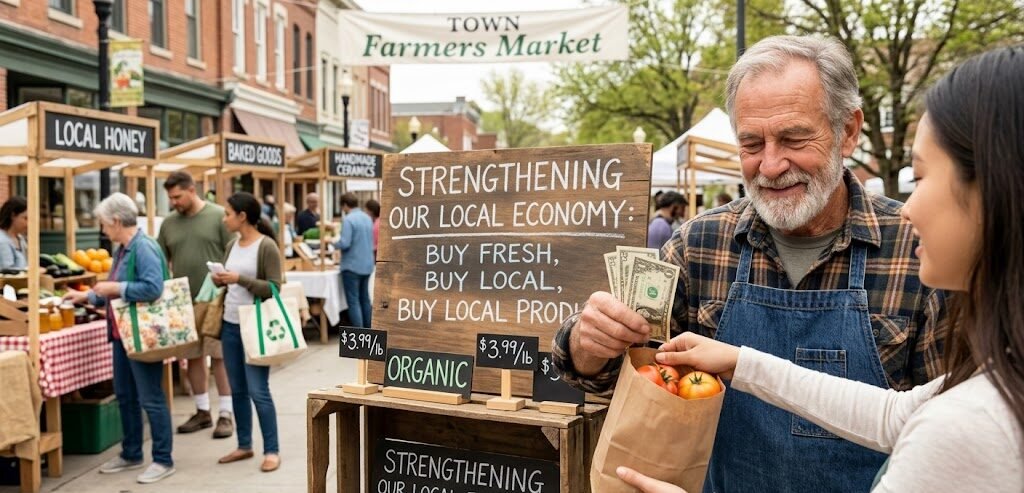
Farmers markets have experienced a remarkable resurgence in recent years, evolving from simple produce stands into vibrant community hubs that serve as powerful economic engines for local communities. These weekly gatherings do far more than provide fresh vegetables and artisanal goods; they create a ripple effect of economic benefits that strengthens the financial foundation of entire regions.
Direct Financial Impact on Local Producers
When consumers purchase goods at farmers markets, a significantly higher percentage of each dollar spent remains within the local economy compared to traditional retail channels. Studies have demonstrated that local farmers and artisans retain between 80 to 90 cents of every dollar spent at farmers markets, as opposed to only 15 to 20 cents when products are sold through conventional grocery stores.
This direct-to-consumer model eliminates intermediaries, allowing producers to set fair prices for their goods while still offering competitive rates to customers. The increased profit margins enable small-scale farmers to reinvest in their operations, expand their product offerings, and create additional employment opportunities within their communities.
Job Creation and Entrepreneurial Opportunities
Farmers markets serve as incubators for small businesses and entrepreneurial ventures. Beyond the farmers themselves, these markets create employment opportunities across various sectors:
- Farm workers and agricultural laborers
- Food processors and value-added product manufacturers
- Market managers and administrative staff
- Transportation and logistics workers
- Artisans and craftspeople
- Musicians and entertainers who enhance the market atmosphere
The relatively low barrier to entry for vendors at farmers markets enables aspiring entrepreneurs to test business concepts, build customer bases, and develop their brands without the substantial overhead costs associated with traditional brick-and-mortar establishments.
Stimulating Secondary Economic Activity
The economic benefits of farmers markets extend well beyond the immediate transactions occurring at vendor stalls. These community gathering spaces generate secondary economic activity throughout surrounding neighborhoods and business districts.
Market attendees frequently patronize nearby restaurants, coffee shops, and retail establishments before or after visiting the market. This increased foot traffic benefits the entire commercial corridor, creating a multiplier effect that amplifies the economic impact of the farmers market itself.
Preserving Agricultural Land and Rural Communities
Farmers markets provide crucial economic viability for small and medium-sized farms, helping to preserve agricultural land from development pressure. By creating reliable income streams for local farmers, these markets enable agricultural operations to remain financially sustainable and keep farmland in production.
This preservation of working landscapes maintains the rural character of communities while protecting valuable natural resources. Furthermore, economically viable farms contribute to local tax bases and support rural infrastructure, creating a more resilient regional economy.
Reducing Economic Leakage
Economic leakage occurs when money spent in a community flows outward to distant corporations and suppliers rather than circulating locally. Farmers markets dramatically reduce this phenomenon by keeping financial resources within the regional economy.
The locally-focused nature of farmers markets means that the money spent continues to circulate through the community multiple times. Farmers purchase equipment from local suppliers, hire local workers, and spend their earnings at neighborhood businesses, creating a virtuous cycle of economic activity.
Building Social Capital and Community Cohesion
While not immediately quantifiable in traditional economic terms, the social capital generated by farmers markets contributes significantly to long-term economic prosperity. These venues facilitate relationship-building between producers and consumers, fostering trust and creating networks that support additional economic cooperation.
The community connections forged at farmers markets often lead to collaborative business ventures, knowledge sharing, and mutual support systems that strengthen the overall economic resilience of the region.
Supporting Local Food Systems Infrastructure
Successful farmers markets often catalyze investments in broader local food systems infrastructure. As markets grow and thrive, communities may develop:
- Commercial kitchen facilities for value-added processing
- Food hubs and aggregation centers
- Cold storage and distribution facilities
- Agricultural education and training programs
- Farm-to-institution procurement networks
These infrastructure investments create additional economic opportunities and strengthen the long-term viability of local agriculture and food production.
Attracting Tourism and Destination Shopping
Well-established farmers markets often become regional attractions that draw visitors from surrounding areas. These destination markets generate tourism revenue and enhance the overall appeal of communities as places to visit, live, and invest.
The cultural cachet associated with vibrant farmers markets can improve property values, attract new businesses, and contribute to community branding efforts that support economic development initiatives.
Encouraging Sustainable Economic Practices
Farmers markets promote economic models that prioritize sustainability and long-term thinking over short-term profits. By supporting farming practices that maintain soil health, protect water resources, and preserve biodiversity, these markets help ensure the continued productivity of agricultural land for future generations.
This sustainable approach to economic development creates more stable and resilient local economies that can better withstand external economic shocks and market volatility.
Conclusion
The economic impact of farmers markets extends far beyond the simple exchange of goods for currency. These community institutions create employment, support entrepreneurship, reduce economic leakage, preserve agricultural land, and build social capital that strengthens entire regions. As communities seek strategies for sustainable economic development, farmers markets represent a proven model for creating prosperity that benefits all stakeholders while maintaining the unique character and values of local areas.
By continuing to support and expand farmers markets, communities invest in a more resilient, equitable, and prosperous economic future that honors local producers, empowers small businesses, and creates vibrant public spaces where economic vitality and community connection flourish together.